
Om: The Sacred Sound of Yoga 🕉️
Its Origins, Meaning and Connection to Anahata Yoga
“Om is all this” Māṇḍūkya Upanishad
There is perhaps no sound more closely associated with yoga than Om. Chanted at the beginning or end of a yoga class, whispered during meditation, or simply held silently within the mind, Om has become almost universal in modern yoga.
But Om is much more than a sound used to begin a yoga practice. For thousands of years, Indian spiritual traditions have contemplated Om as a profound symbol of consciousness, creation, breath and the nature of reality itself.
For Anahata Yoga, the meaning of Om becomes particularly beautiful. At the heart of our Anahata practice is an exploration of awareness, breath, vibration and the subtle relationship between body, mind and consciousness. Om provides a bridge between all of these It is both sound and silence. It begins as vibration and ends in stillness. And perhaps most importantly, it invites us to listen.
Where does Om come from?
The sacred syllable Om, also written Aum, has its roots in the ancient Sanskrit traditions of India. It appears in some of the oldest surviving Hindu philosophical texts, including the Upanishads, where it is given profound metaphysical significance.
One of the most important texts for understanding Om is the Māṇḍūkya Upanishad, a short but extraordinarily rich text devoted almost entirely to the syllable. It opens with the declaration that “Om is all this.” The text then explores Om as a symbol of the entirety of experience and consciousness. This is a very different understanding from simply thinking of Om as a calming sound at the beginning of a yoga class. Om becomes a way of contemplating what it means to exist.
What does Om actually mean?
There is no single English word that completely translates the meaning of Om. It is often described as representing:
- the totality of existence
- consciousness
- the universe
- the divine
- the source from which creation arises
- the relationship between sound and silence
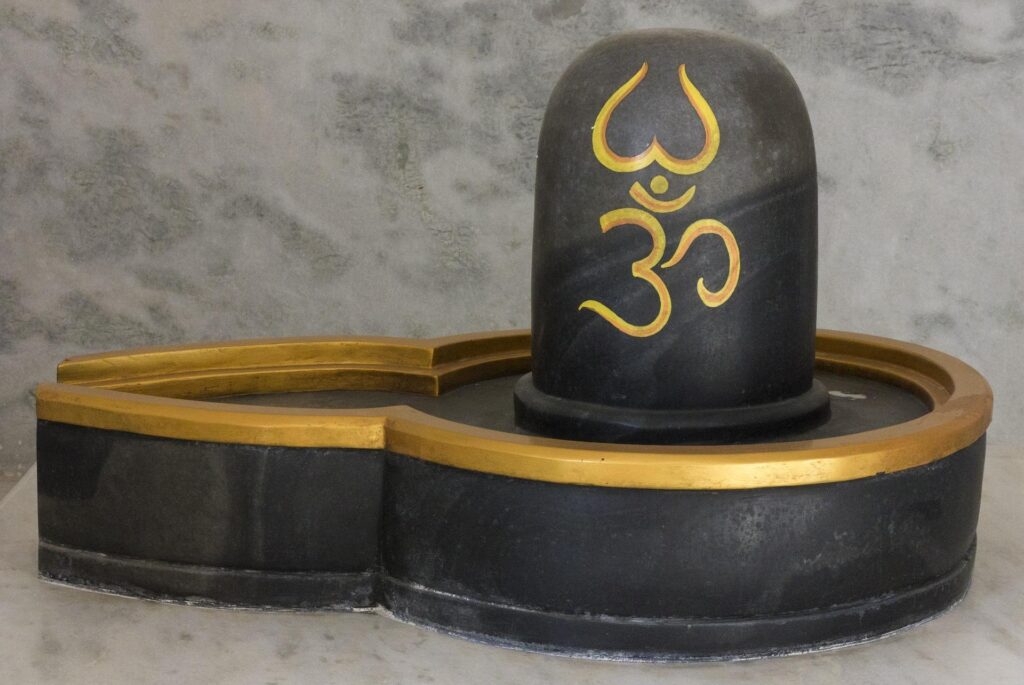
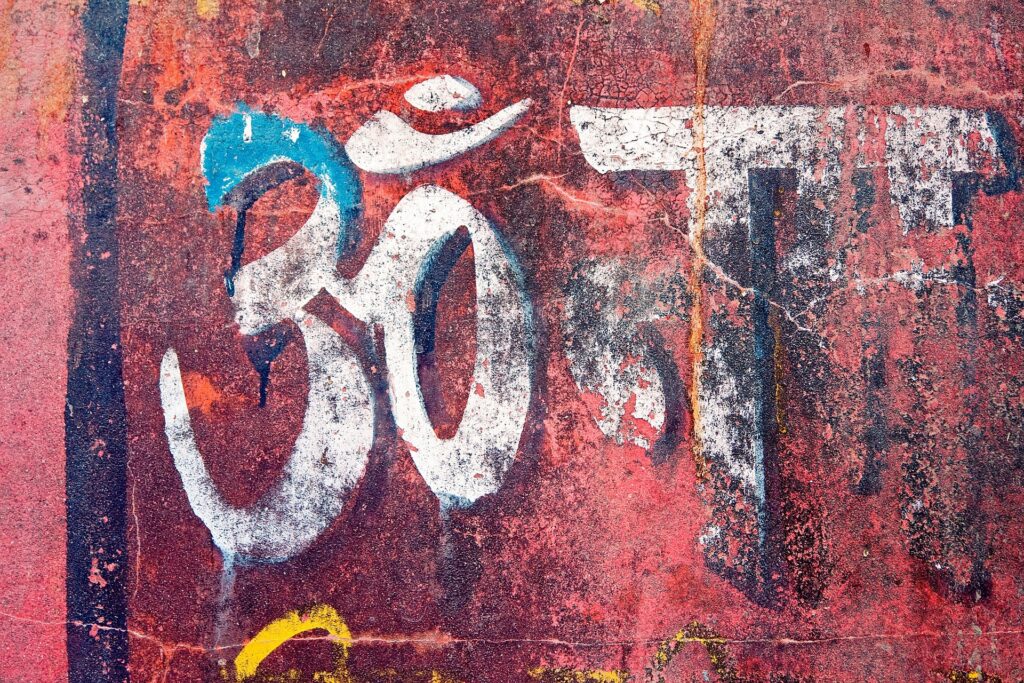
In Sanskrit, Om is traditionally written ॐ. It is also transliterated as AUM, reflecting three primary sounds: A — U — M
These three sounds are traditionally associated with different dimensions of existence and consciousness. But the most important part may actually be what comes after them. Silence.
The silence beyond Om
After A-U-M, there is silence. In the Māṇḍūkya Upanishad, this silence is associated with turīya — literally “the fourth”. Turīya is described as that which underlies or transcends the three ordinary states of consciousness. It cannot easily be described. It is not simply another state alongside waking, dreaming and deep sleep. It points towards a deeper dimension of awareness. This gives Om a remarkable structure:
A → waking
U → dreaming
M → deep sleep
Silence → the underlying reality of consciousness
For a yoga practitioner, this can become a meditation in itself. We make the sound. We listen. And then we become aware of the silence that follows.
Om and the vibration of creation
One of the most beautiful ideas associated with Om is that sound and creation are intimately connected. In several Indian philosophical traditions, sound is not merely something that happens after creation. Sound can be understood as an expression of the creative principle itself. The Sanskrit concept of śabda — sound or sacred utterance — becomes especially important within later Indian spiritual traditions. The idea of śabda Brahman, the Absolute expressed as sound, gives us a profound way of understanding Om. Om is not simply a word with a definition. It is something to be experienced through vibration. When we chant Om, we don’t merely think about consciousness. We feel the sound moving through the body.
Om and the breath
Every chant begins with breath. We inhale. And then, as we exhale, the sound emerges. Aaaaaa… The sound gradually changes: A → U → M And then: silence.
The entire process takes place on a single exhalation. This makes Om a beautiful bridge between prāṇāyāma and meditation. The breath becomes the vehicle. The sound gives the mind something to focus upon. The vibration creates a physical experience. And the silence invites awareness inward. Rather than simply “thinking” about meditation, we experience it through the body and breath.
Om and Anahata Yoga
This connection becomes particularly meaningful within Anahata Yoga. The Sanskrit word anāhata is usually translated as “unstruck” or “unbeaten”. In yogic and tantric traditions, Anahata is also associated with the heart chakra, located at the centre of the subtle body. The idea of an “unstruck sound” is especially cool. Anahata can be understood as a sound that does not arise from two physical objects striking together. It points towards a subtler, inner vibration. This provides a beautiful philosophical connection between Anahata and Om.
Om is a sound that we consciously create with the voice. But the deeper practice is learning to become aware of the silence and subtle vibration beneath the audible sound.
We move from: sound → vibration → silence → awareness This is very much in the spirit of an inward yoga practice.
The heart as a centre of awareness
In modern yoga, Anahata is often associated with qualities such as love, compassion, connection and emotional openness. But the traditional concept is richer than simply “the heart chakra”. Anahata represents a meeting point. It sits between the lower and upper chakras. Symbolically, it can therefore be contemplated as a place where different aspects of our being meet: physical and spiritual, individual and universal, breath and awareness, sound and silence. This makes Om a particularly beautiful sound to explore in an Anahata Yoga practice.
Om, mantra and meditation
Om is also a mantra. The Sanskrit word mantra is often understood as a sacred sound used as an instrument for focusing and transforming the mind. The relationship between mantra and meditation is central to an Anahata practice. Rather than attempting to force the mind to become empty, we give it something to rest upon. The repetition of Om can become a single thread running through the changing landscape of thought. Thought arises. We notice it. We return to Om. Another thought arises. We return again. Gradually, the sound becomes less important than the awareness surrounding it. Eventually, the mantra may become internal rather than vocal. And finally, we may simply sit in silence.

Listening to Om
Perhaps we sometimes place too much emphasis on producing the “correct” sound. But yoga is ultimately a practice of awareness. So instead of asking “Am I chanting Om correctly?”, we might ask “What am I noticing?”
Feel the breath entering. Feel the breath leaving. Notice the vibration in the chest, throat, mouth and skull. Notice how the sound changes. Notice where the vibration seems strongest. And then notice what happens when the sound disappears. The silence after Om is not an absence.
Why Om belongs in an Anahata Yoga practice
For me, the beauty of Om lies not simply in its history or symbolism. It lies in its ability to bring together several dimensions of yoga practice; Breath, Body, Sound, Vibration, Concentration, Meditation, Awareness, And ultimately: silence.
This is particularly relevant to Anahata Yoga, where the practice invites us to explore the relationship between movement and stillness, breath and awareness, the physical and the subtle. Om gives us a way to experience that relationship directly. We don’t have to understand every philosophical teaching before we begin. We can simply breathe. We can listen. We can feel. We can become still.
Coming home to the sound within
Perhaps the greatest lesson of Om is that the journey doesn’t ultimately take us somewhere else. It takes us inward. The ancient yogic traditions repeatedly invite us to look beyond the surface activity of the mind and discover a deeper dimension of awareness. Om can become a doorway into that exploration.
We begin with a breath.
The breath becomes sound.
The sound becomes vibration.
The vibration dissolves into silence.
And in that silence, for a moment, there is nothing we need to add.
Nothing we need to achieve.
Nothing we need to become.
We simply listen.
🕉️