

Underground wonders at Cwm Connell – Early Purple Orchid
A blog by our local ecologist Steve Halton
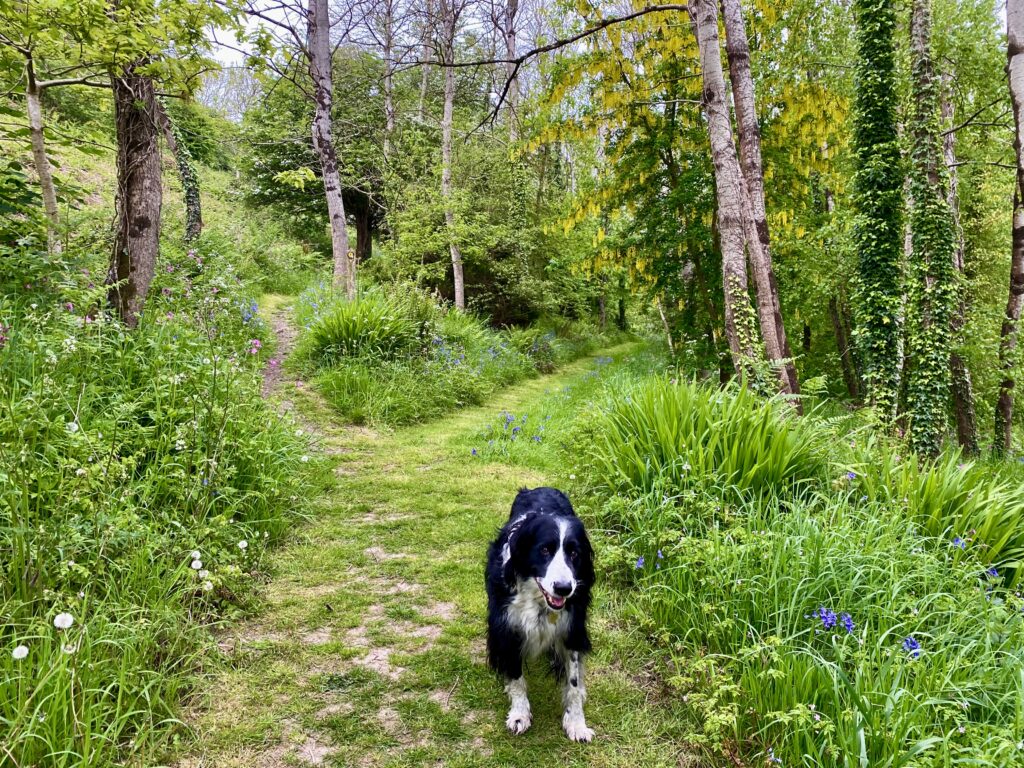
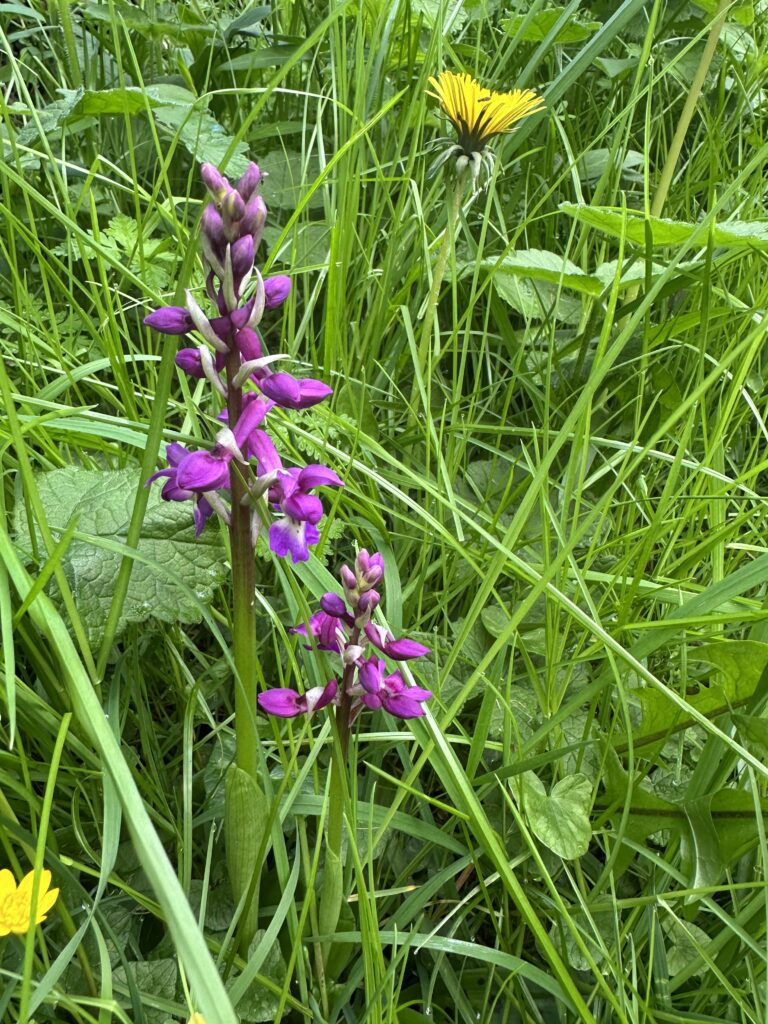
In the spring and early summer, a slow meander down the hidden valley of Cwm Connell may show carpets of bluebells, the starry white flowers of ramsons or wild garlic and the pink flowers of red campion but, you may also catch a glimpse of something more exotic; a showy, deep purple flower which shears the retina with its vividness amongst the lime greens of spring.
It is an orchid – not quite the showy tropical blooms that you can buy in garden centres – but a native British orchid growing quite happily amongst the other wild flowers of hill, coast and woodland in this part of Wales.
The Early Purple Orchid (Orchis mascula)
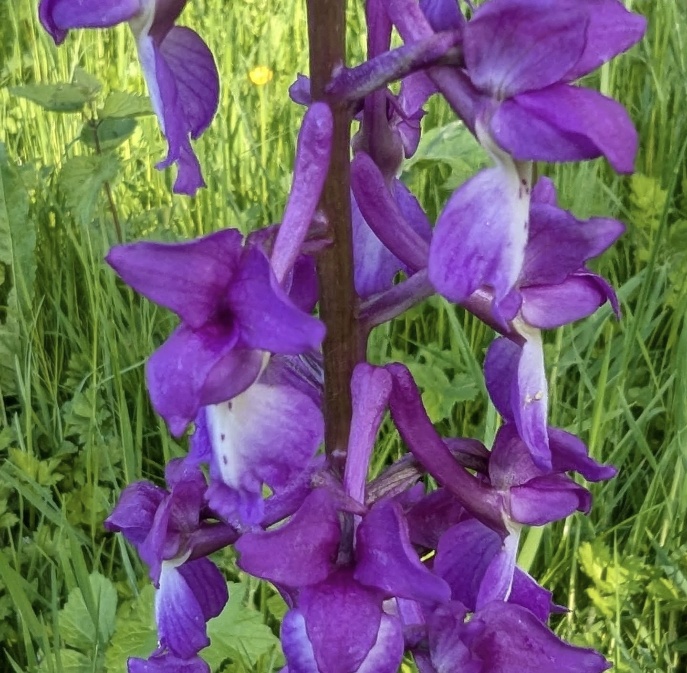
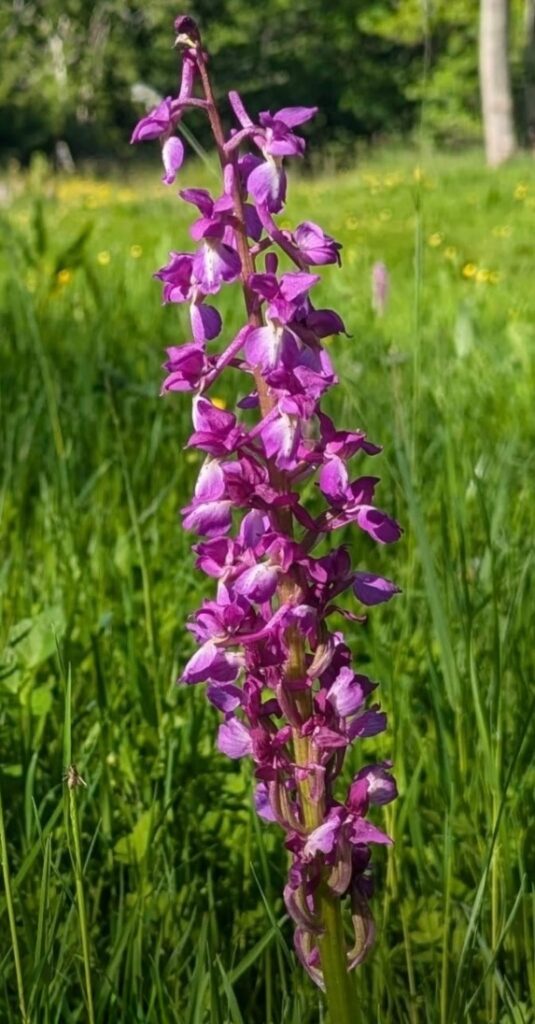
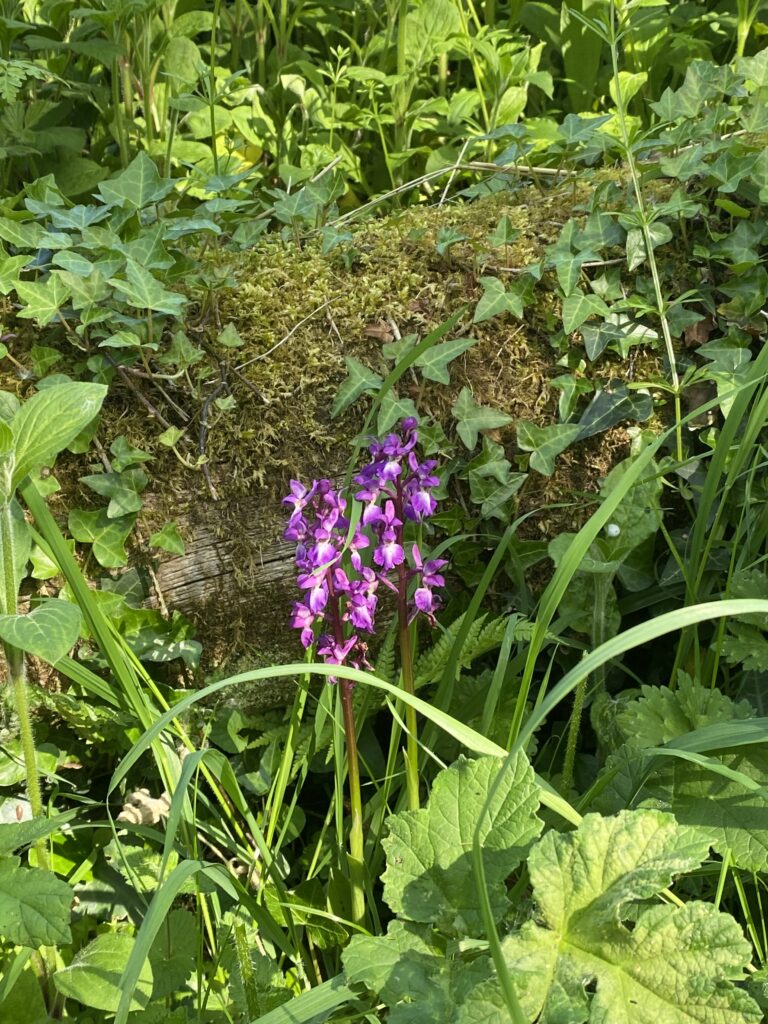
Its name is the Early Purple Orchid (Orchis mascula) and it is early and purple. The other part of the name, mascula, may refer to the robust, strong growth of the plant but it could also refer to the fact that it has two round tubers in the ground underneath…
But, this plant, like nearly all orchids in the UK, has a hidden secret, another life, which few people ever see or know about.
Let’s start with the seeds – an orchid produces seed once the flower has been pollinated and the ovary produces a seed capsule. The seeds themselves are tiny and look like fine dust; one capsule can contain millions of seeds; they are so small that they contain very little nutrients which normally enable the embryo plant to grow. Once the capsule opens the seeds are blown away by the wind but most will never reach the right environment to start growing into a new plant. But a few do, and that is all that is needed to keep the plant increasing in numbers.
The seeds disperse over large areas and 99% will never find the right conditions to germinate but even just that 1% is all that is needed to continue the survival of the orchid.
But that is only half the battle…
For the orchid seed to start growing it needs a partner – in this case a microscopic fungus which grows in certain soils. If the soil does not contain that particular species of fungi then the seed cannot grow but if it does then it’s all systems go.
As the orchid seedling starts to develop the fungus in the soil fuses with the roots of the orchid so an exchange of minerals and nutrients develops. The orchid needs the fungi for germination and the provision of nutrients whilst the plant gives the fungi sugars which it produces as it photosynthesis. So, it is a mutual relationship, known ecologically as mycorrhizal symbiosis.
The young orchid may spend several years underground, growing very slowly as it builds it strength and structure until, one spring, in an explosion of growth and energy, it suddenly pushes up a stem which produces flowers and starts the whole cycle off again. It is truly a miracle of hundreds of thousands of years of evolution…


