
The astonishing Hummingbird Hawk Moth
By Steve Halton our resident Ecologist
Like scraps of paper; travels from Africa to Cwm Connell
Imagine this…
You weigh as much as half a paperclip; your wingspan is no larger than a half-folded fairy cake paper case and your furry body is less than 5cm long – you are a miniature replication of a hummingbird (itself a very small creature) in so many ways and yet those paper-thin wings can get you from North Africa to the UK – a journey of 1,000 mile or more!
This summer has seen a virtual explosion in sightings of Hummingbird Hawk Moths, with the splendid Latin name of Macroglossum stellatarium – in fact it has been a ‘Hummingbird Hawk Moth summer’. Due to the summer temperatures, the wind direction and a successful breeding season earlier the numbers of these moths have built up and given rise to lots arriving on our shores over the summer months.
I have enjoyed watching these moths while watering the beds at Cwm Connell.
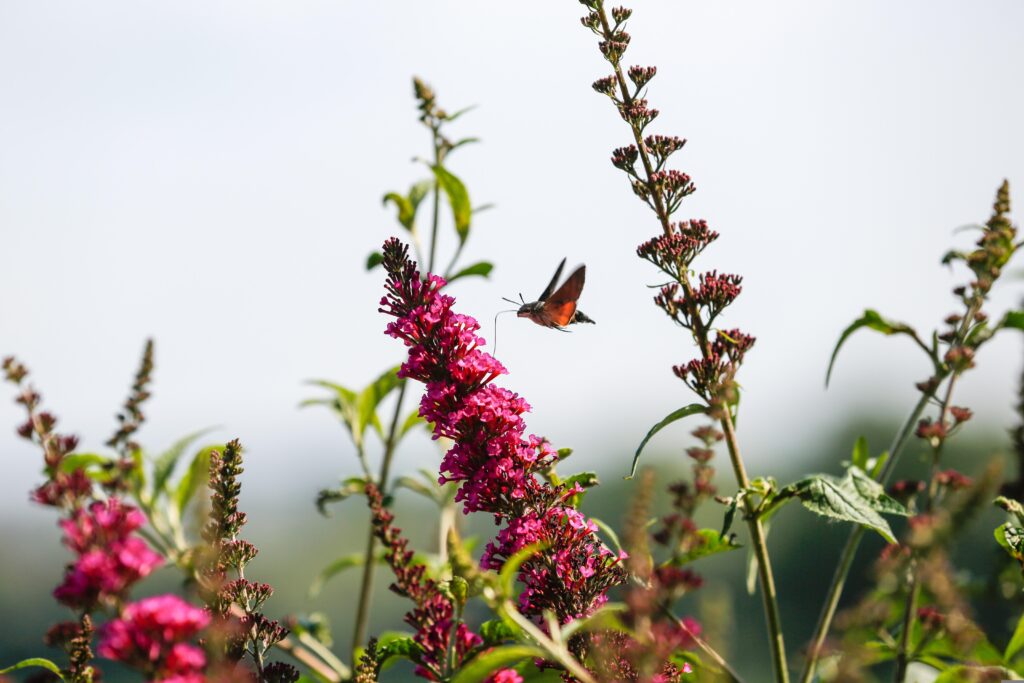
Hummingbird Hawk Moths have been seen throughout the country on warm sunny days; they seem to particularly like flowering plants such as Red Valerian, Honeysuckle, Buddleia, Phlox and Verbena.
An example of Convergent Evolution
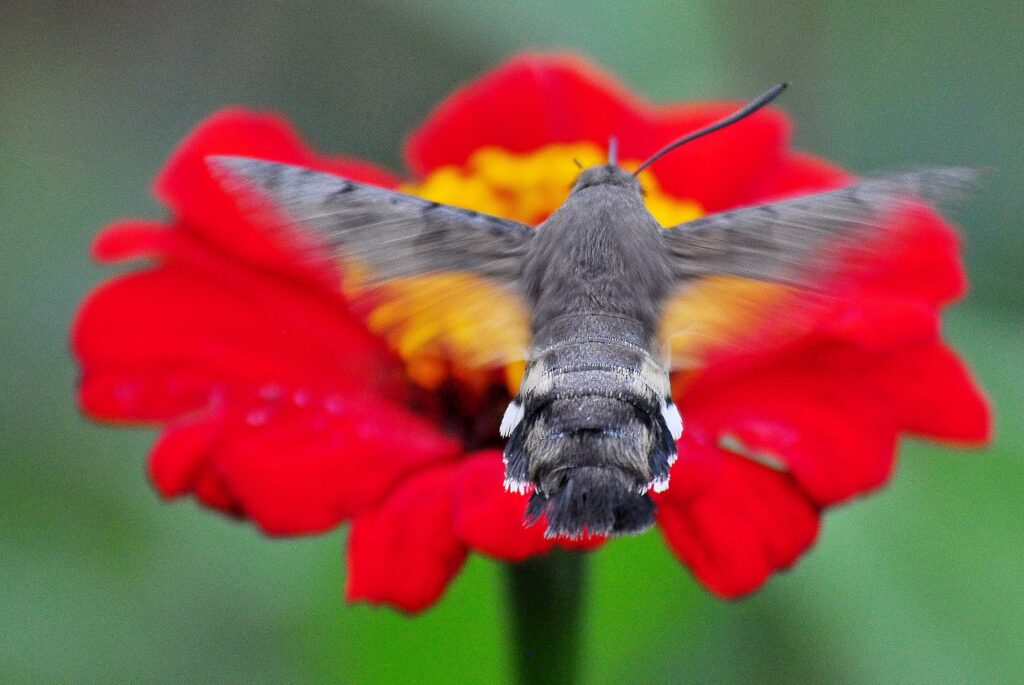
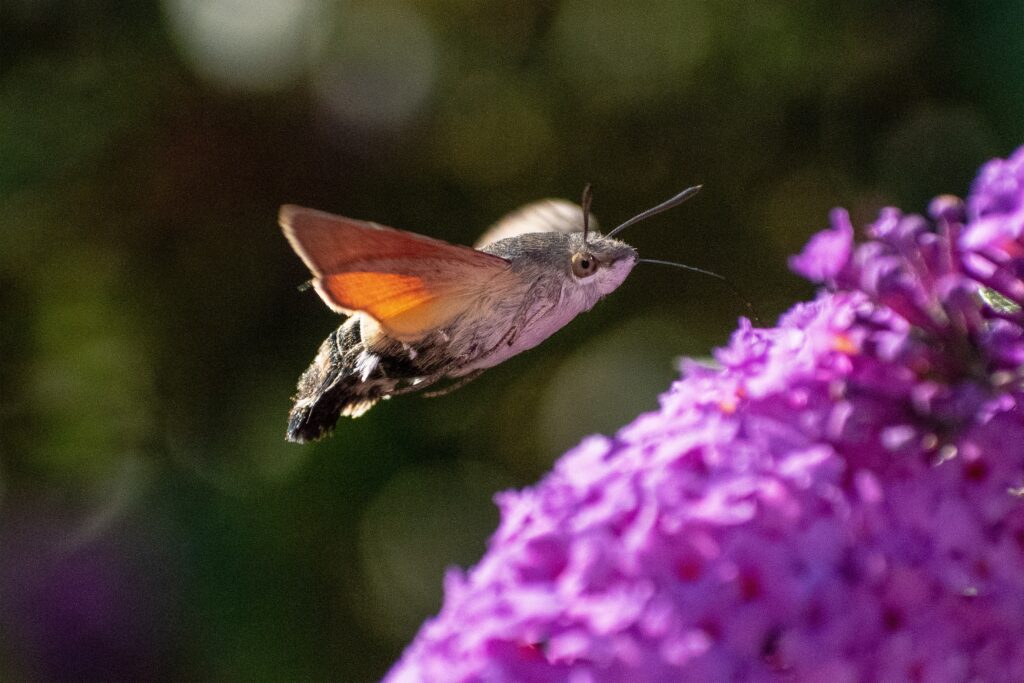
The moths are very distinct, in fact they are totally distinct – they usually appear like a small, furry, buzzy, furry hummingbird. They are a good example of convergent evolution – the independent evolution of similar features in totally different species due to their having similar lifestyles, ie; both hummingbirds and hummingbird hawk moths both extract nectar from flowers by hovering.
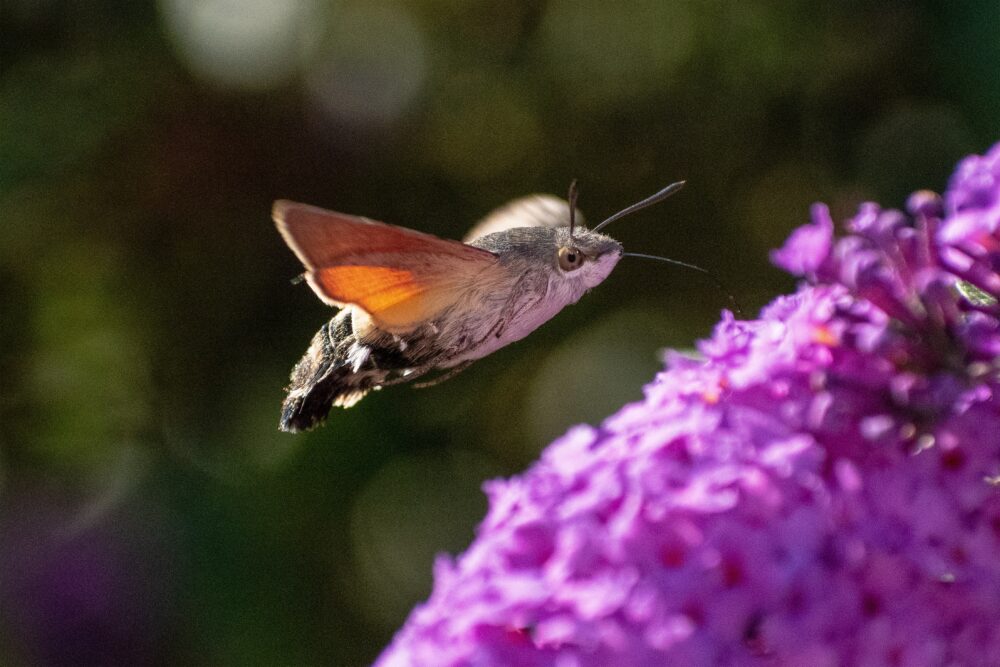
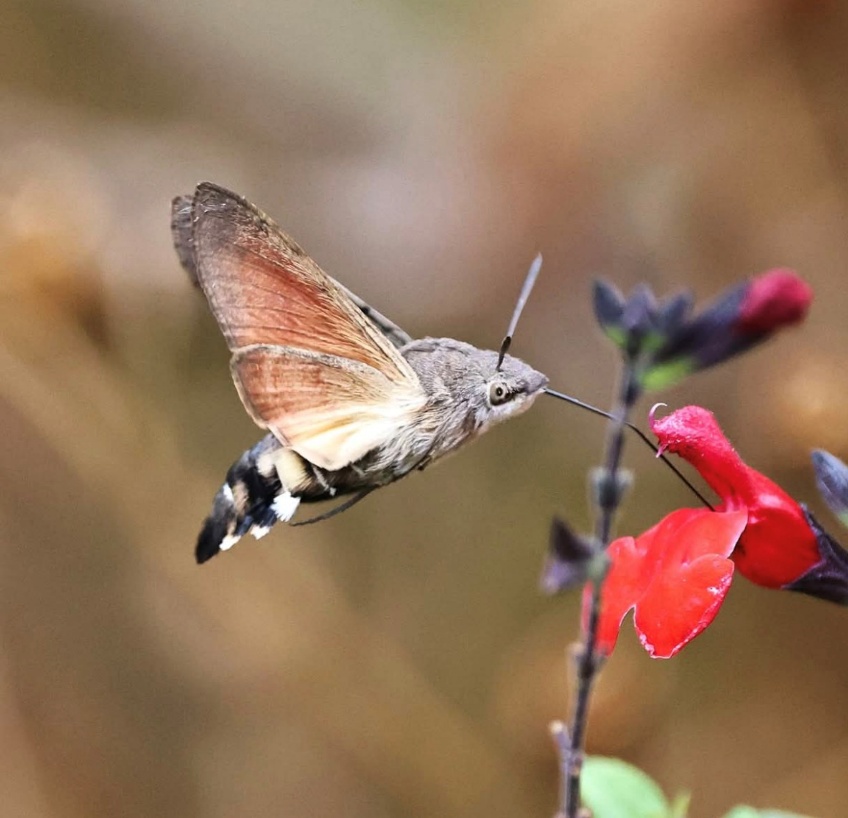
The moths fly fast and with a distinct hum, especially as they start to collect nectar from the flowers. They do this by deftly hovering over the flowers whilst extending their tube-like tongue into the depths of the flowers to extract the sweet nectar within. They may visit several flowers on the one flowerhead, rapidly buzzing from one to the next. Finished, they move onto the next flowerhead to repeat the process, Suddenly, with a loud drone, they’re up and away and swinging off to the next group of favourite flowers, maybe hundreds of metres away. They often visit groups of flowers at the same time every day.
They give the impression of a small robotic creature, rather like something exquisite created by Fabergé – a tiny furry clockwork toy – a marvel of miniaturisation. One of the mostobvious aspects of the moth are the bright ginger-orange smudges on the wings which blur into a golden haze while the moth is in flight. As it hovers the black and white chequerboard ‘tail’ provides a bright contrast, rather like hazard warning lights.
Are they resident or migratory?
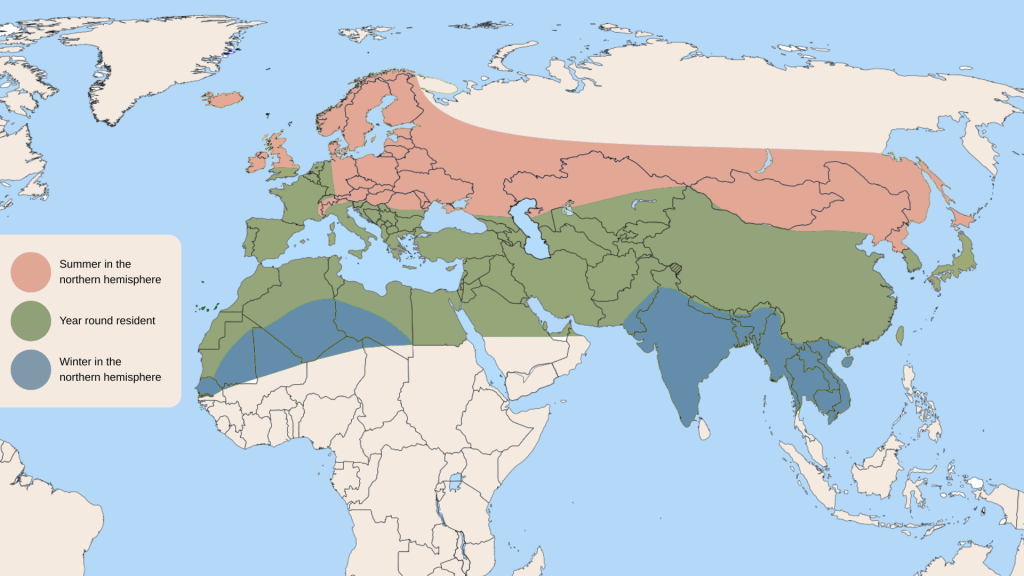
Their life history is just as astonishing; in the southern parts of the UK (including Wales) and Europe the moths are resident and can now overwinter but in the north of UK and Europe the moth migrates all the way to and from Africa and the Mediterranean. When hovering the moths beat their wings at around 80 times per second – they become a ghostly blur. The females lay up to 200 glossy pale green eggs, one per bedstraw. Caterpillar foodplants include hedge and lady’s bedstraws and wild madder.
Some adults are now overwintering, with some being seen hiding in sheds, wall, crevices or greenhouses, especially in south east England. Milder winters and successful overwintering mean that this species is becoming part resident rather than solely migratory, with UK populations boosted by annual migrant arrivals. We look forward to welcoming these remarkable creatures more frequently as they provide colour, fascination (and a quiet hum) to our gardens in the future.
Learn more about the incredible nature at Cwm Connell by booking Steve Halton for a nature walk from your cottage.
M 07796 081602 stevehalton@gmail.com https://www.instagram.com/stevehaltonwildlifeart/