

Anahata Yoga: Origins, Philosophy, Practice and Living from the heart…
“I want to join with you, I want to open my heart to you without any expectations, give you all my love without any conditions, honour and respect this love, never do anything to harm this love, and to create the strength I need to be this loving” Shiva’s Dance of Love
Anahata Yoga: Origins
Anahata Yoga is as an ancient yogic system originating in northeastern Indian state of Assam and the Himalayan foothills of northeastern India. It developed as a practical system for health, longevity, and spiritual development among mountain communities. It is a form of tantric Hatha Yoga with an Advaita philosophy – a non dualistic tradition. Because Assam sits at a cultural crossroads near regions such as Bhutan and Nepal, Anahata Yoga includes movement qualities reminiscent of Tai Chi and Qigong, alongside classical Hatha Yoga.
People often ask me about the origins of Anahata Yoga and are curious why they have never encountered it. The simple answer is that here in the West we are only familiar with a very few traditions; Classical Hatha, Ashtanga, Vinyasa being the main ones. However the Yoga tradition encourages diversity with its lack of dogma and as a result there are literally thousands of different schools and practices in India all of which exist quite happily in their locality. The Hatha Yoga practices and the more modern Vinyasa practices that we know in the West as Yoga are really a tiny glimpse of this vast array.
Awakening the Heart Through the Union of Shiva and Shakti
In the yogic tradition, the journey inward is often described as a movement from separation to unity, from fragmentation to wholeness. At the centre of this transformative path lies Anahata, the heart chakra, the energetic bridge between the physical and spiritual dimensions of our being. Anahata Yoga invites practitioners into this sacred space of balance, compassion, and self-discovery. Situated at the centre of the chest, the Anahata chakra is associated with unconditional love, empathy and forgiveness.
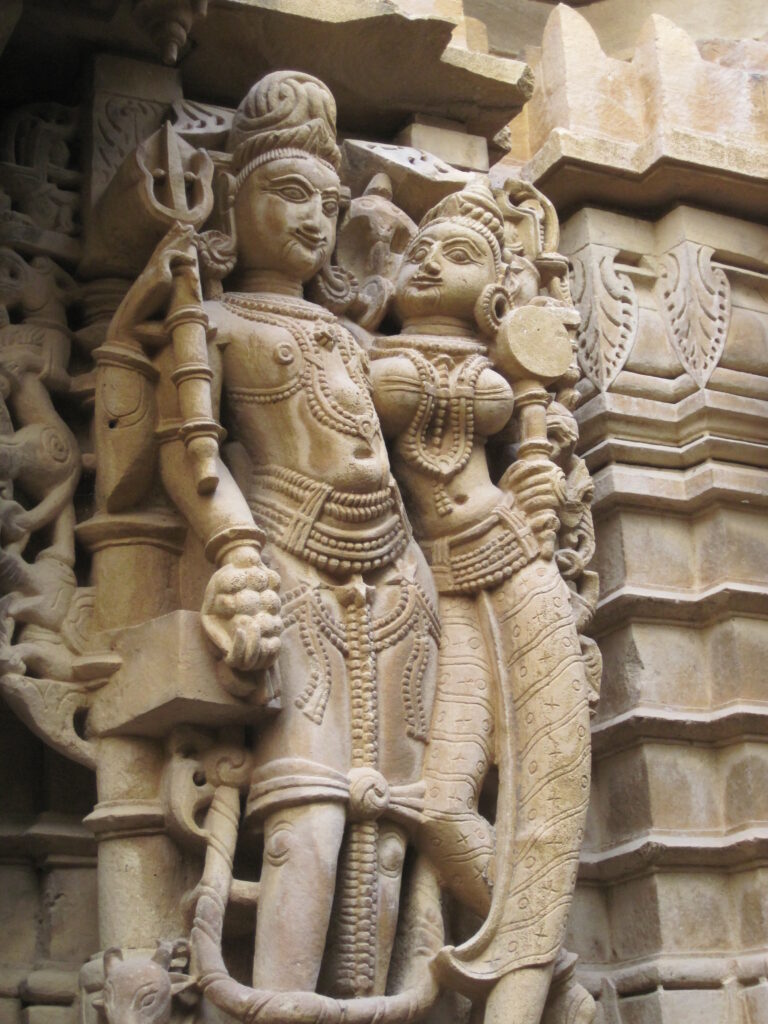
In the Anahata tradition traditions, spiritual awakening is understood through the dynamic interplay of Shiva and Shakti. Shiva represents pure consciousness—the still, witnessing awareness that exists beyond thought and form and the “solar” principle. Shakti embodies the creative force of life itself—the energy that animates the universe and manifests all experience, she represents the “lunar” principle. While these principles are often depicted as masculine and feminine, they are of course in themselves a part of the illusion of duality and ultimately transcend gender.
The endeavour of all Hatha yoga practices is to unite Ha, the sun, Shiva, Awareness with Tha, the moon, Shakti, Energy. This is the alchemy, this is where the magic lies, Anahata Yoga recognises the heart centre as a sacred meeting place where Shiva and Shakti come into balance. Through conscious movement, breath work, meditation, and self-inquiry, practitioners cultivate a state in which these seemingly opposite forces are experienced as one unified reality.
Choosing to love yourself exactly as you are
Imperfection is the natural state of the universe yet we demand perfection of ourselves with disastrous consequences. Anahata Yoga encourages us to open our hearts, to transcend the physical body and the mind’s limited consciousness and to learn to love ourselves exactly as we are. We choose to love ourselves and to be compassionate about the things we’d like to change knowing that with the gift of free will we can choose to change. Anahata gifts us the tools to accept, to transcend what cannot be accepted, to become who we are truly meant to be. At the heart of our Anahata practice is the understanding that we are all perfectly imperfect, imperfect perfect, learning to turn from judgement to compassion. Learning to love ourselves again is one of our greatest challenges. Fighting years of conditioning our practice teaches us that only when we truly love and accept ourselves for who and what we are can we ever truly love others for who and what they truly are.
Practices designed to activate and balance the heart centre
The tradition places special emphasis on Anahata Chakra, which in yogic philosophy is associated with love, compassion, balance, forgiveness, and connection. Many practices are designed to cultivate these qualities psychologically as well as energetically. Compared with many yoga classes, Anahata Yoga tends to be more fluid and meditative. Typical elements include flowing sequences and kriyas, synchronised breath work, heart-opening postures, chanting and mantra, meditation, energetic practices related to chakras and kundalini, symbolic movement sequences called “dances.”
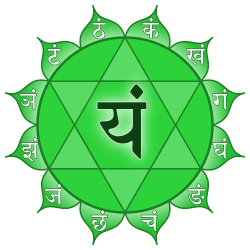
Flows such as Shiva’s Dance of Love, The 5 Element Form, The Dance of the 3 Warriors, Twisting Camel (Ustrasana), Flowing Cobra (Bhujangasana), Rising Bridge (Setu Bandhasana), all expand the chest and encourage energetic openness. Breath practices such as Viloma breath and Shiva Draws his Bow create prana at Anahata, Nadi Shodhana (Alternate Nostril Breathing) and heart-centred breathing cultivate inner balance. Meditations including The Beggars Bowl are key to building gratitude, The Anahata Meditation on the heart centre deepens feelings of compassion and connection. Sacred sounds and mantras, including the Hamsa Mantra, and the bija mantra “Yam,” are traditionally associated with the Anahata chakra and support emotional healing and spiritual growth.
Living from the Heart
The true purpose of Anahata Yoga extends beyond the yoga mat. It invites us to live with greater kindness, authenticity, and presence in our everyday interactions.
When the heart chakra is balanced, we become more capable of giving and receiving love without attachment or fear. We learn to meet ourselves and others with compassion, creating space for healing and transformation.
Anahata is a “yoga of the heart,” emphasising compassion, unconditional love, emotional openness, self-acceptance and spiritual connection. In this sense, Anahata Yoga is not simply a practice—it is a way of being. It is the continual remembrance that beneath the fluctuations of daily life, the stillness of Shiva and the creative power of Shakti are already united within the heart. As we cultivate awareness of this inner union, we discover that the journey toward wholeness has always been a return to what was never truly separate.


