
Birds are singing already at Cwm Connell
Guest blog from our resident Ecologist Steve Halton
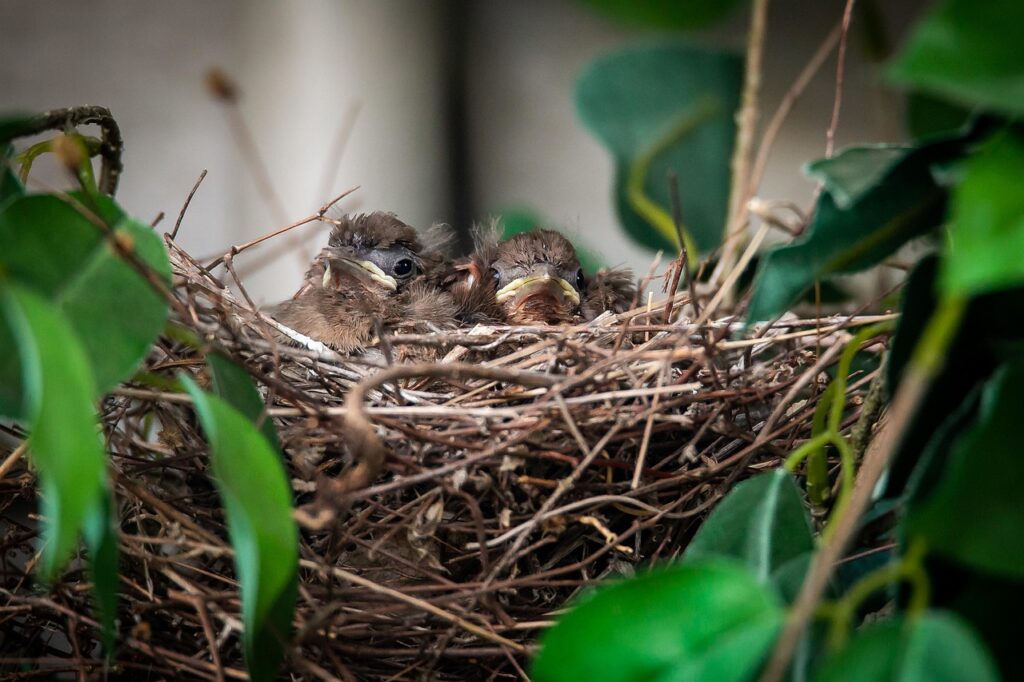
I’m ever the optimist and, to me as an ecologist, spring is now well on its way! The lengthening days are driving birds’ hormones and turning their thoughts to attracting a mate, nesting and bringing up young!
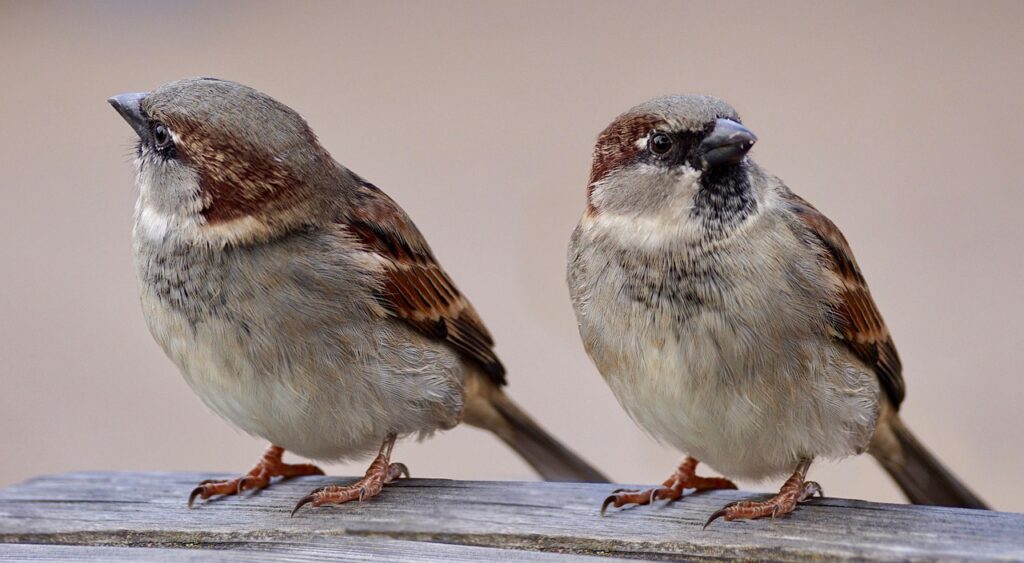
Here at Cwm Connell in west Wales our resident birds are beginning to sing more frequently, especially in the mornings and evenings.
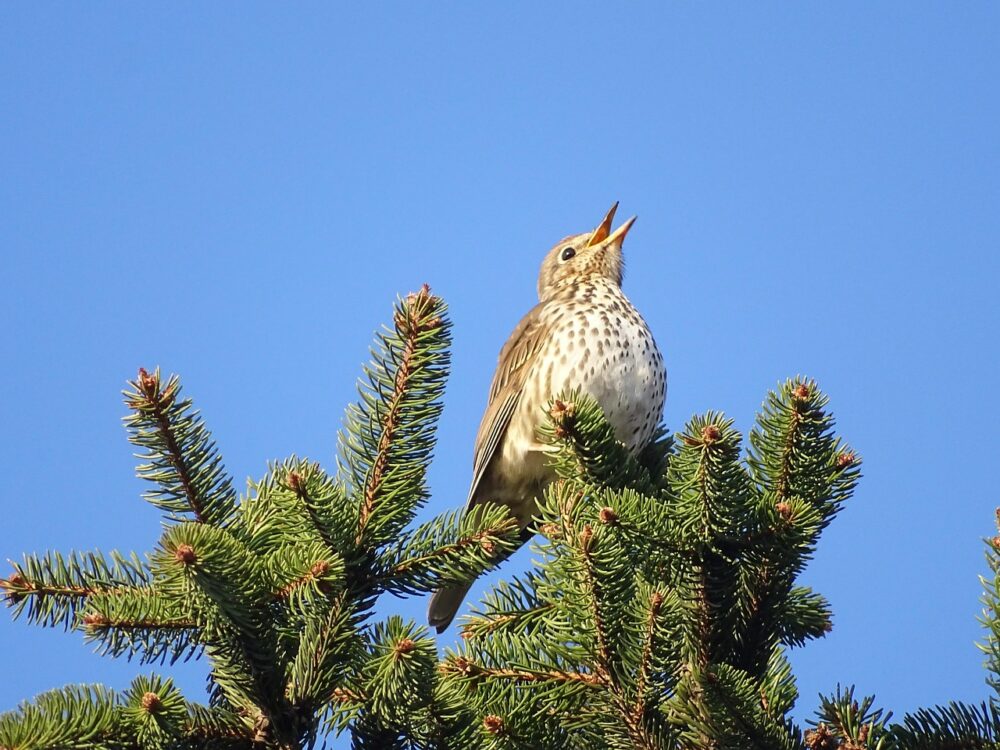
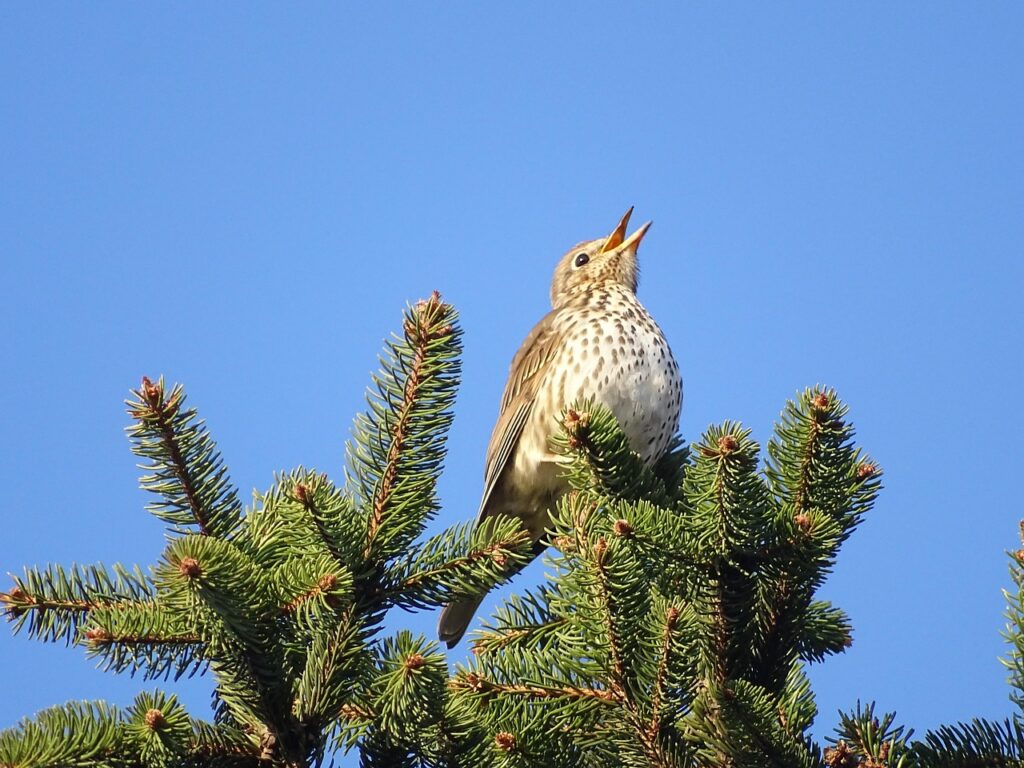
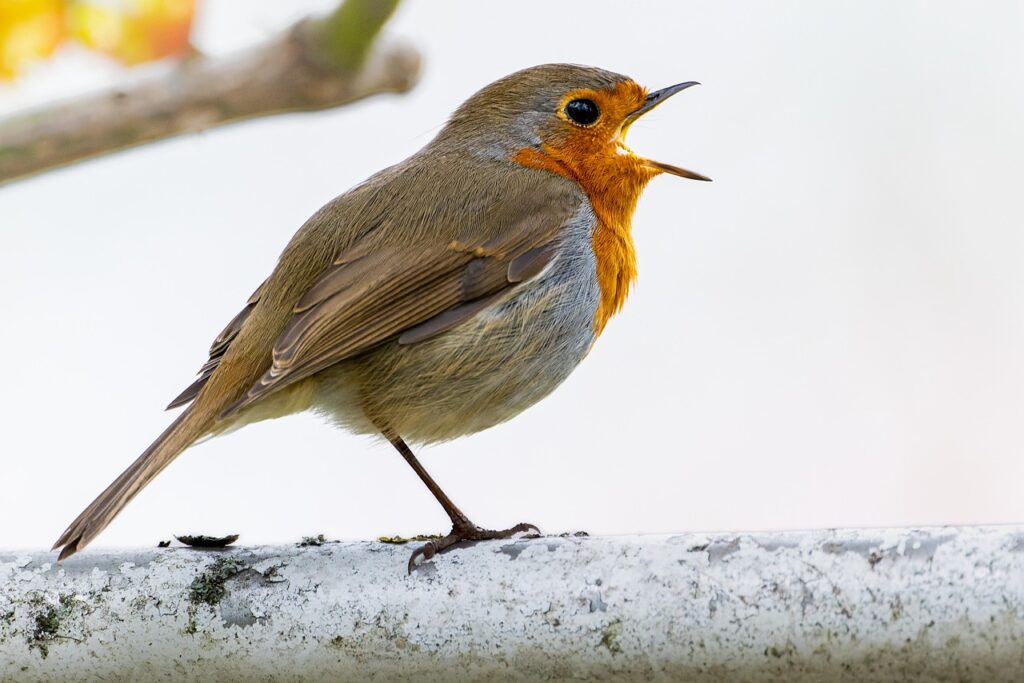
Birds such as Robins and Song Thrushes have been singing since Christmas, Robins with their jangly songs and Song Thrushes with their speckled breasts and loud fluty songs, often sung from the tops of tall trees (they often repeat the same phrase three times so: ‘did he do it’, ‘did he do it’, ‘did he do it’ followed by ‘yes he did’, ‘yes he did’, ‘yes he did’!). It is nearly always the male birds who sing so loudly singing from high up is a good way to announce ‘I’m a perfect fit male who is strong and with a fantastic voice so I can impress all the ladies and drive away any competing males’!
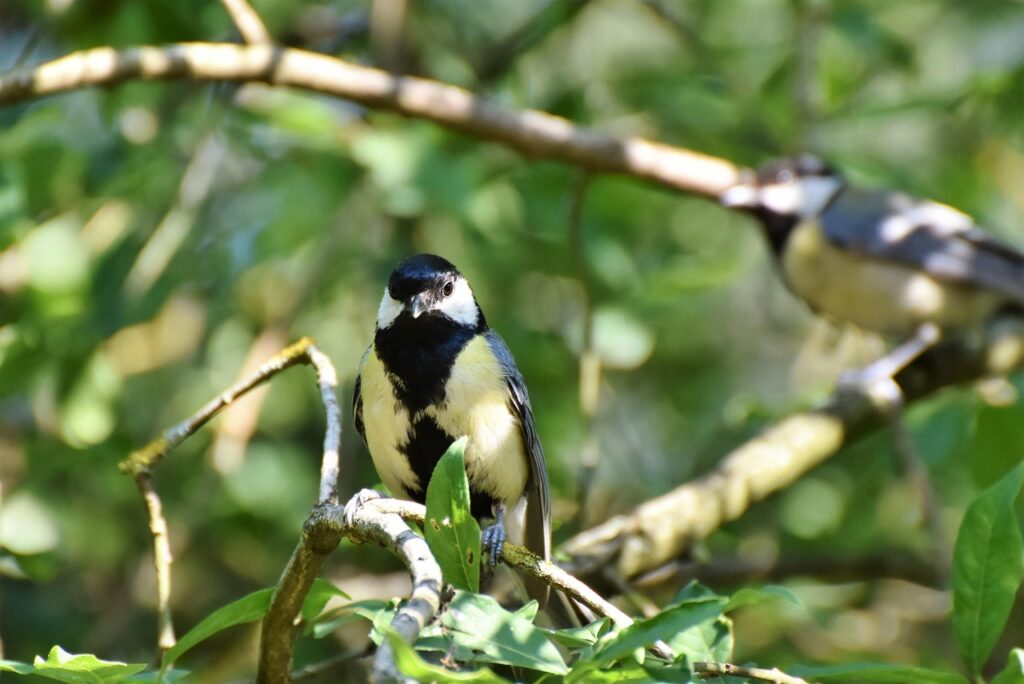
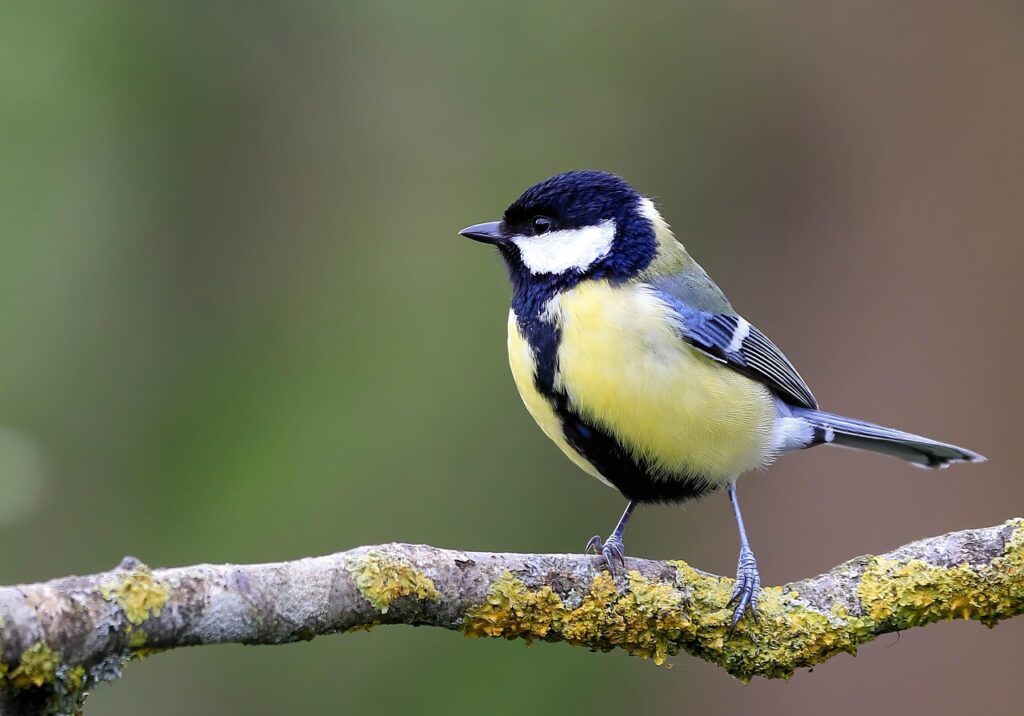
This early in the year you may also hear Great Tits with their ringing ‘teacher-teacher-teacher’ song echoing through the woodlands – another simple but clear song but, be aware, they can confusingly switch from one song to another.
Bird song tends to reach a peak between mid-April and mid-June. By then all the migrants (many travelling from mid and south Africa) will have arrived and the dawn chorus swells to an overflowing soundscape of song which has to be heard to be believed.
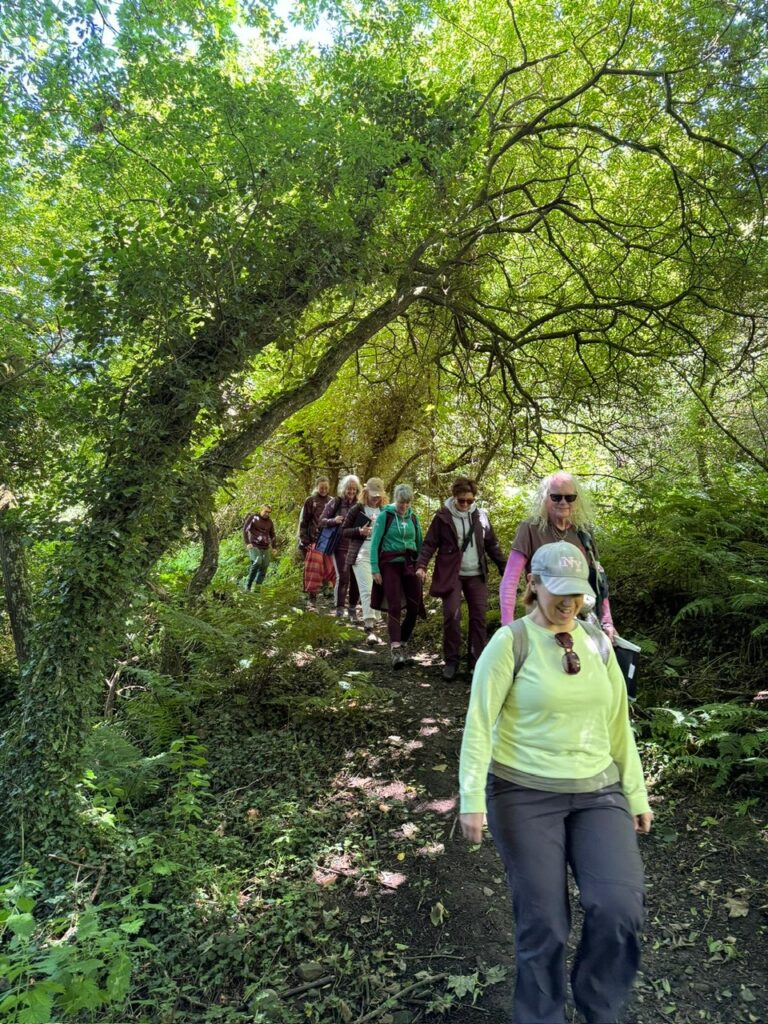
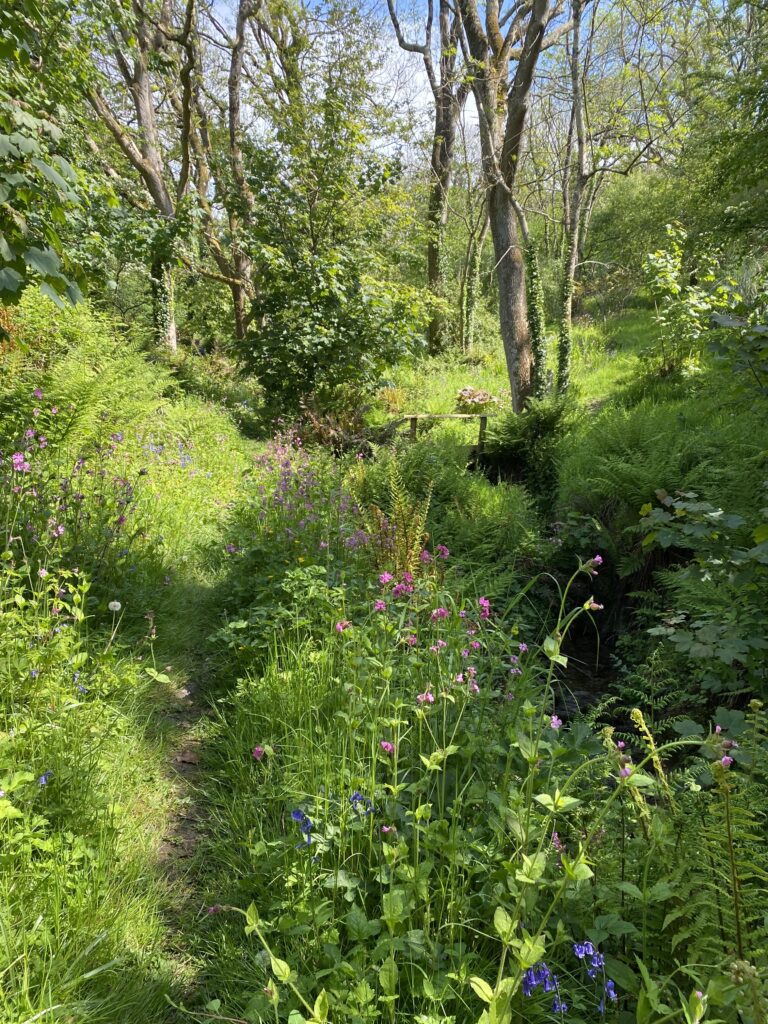
Imagine walking down the small valley from Cwm Connell on a morning in early May
The trees are covered in fresh, verdant green leaves, the ground is covered with the blue mist of thousands of bluebells and the flowers of wild garlic carpet the ground with constellations of white stars and rich aromas. A babbling stream runs down the valley and bird song rings everywhere from trees, bushes and bracken.
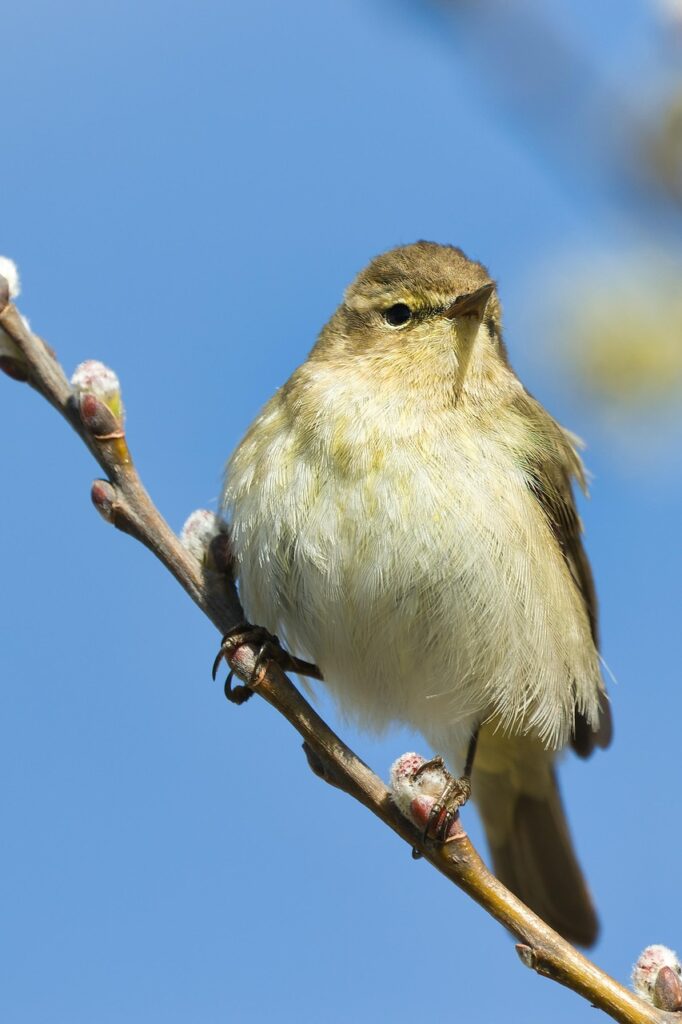
One the most obvious songs comes from the Chiffchaff, a small greenish-yellow warbler which weighs about the same as a fifty-piece coin and will have travelled all the all the way from north Africa to arrive here in Wales as early as mid-March – one of the first migrants to reach our shores after a three- or four-week migration. Its song is onomatopoeic so it calls its own name; ‘chiff-chaff’, ‘chiff-chaff’, chiff-chaff’ – it’s so distinct and easy to recognise. The warblers are a group of slender migratory birds which feed on insects so they have to leave the UK in the autumn (although some also overwinter here) to find food further south. They are all very good at singing whilst hidden from dense vegetation and trees so you really need to know your birdsong – or find an expert to take you out. Or try using Merlin which is a good app to help you identify bird songs.
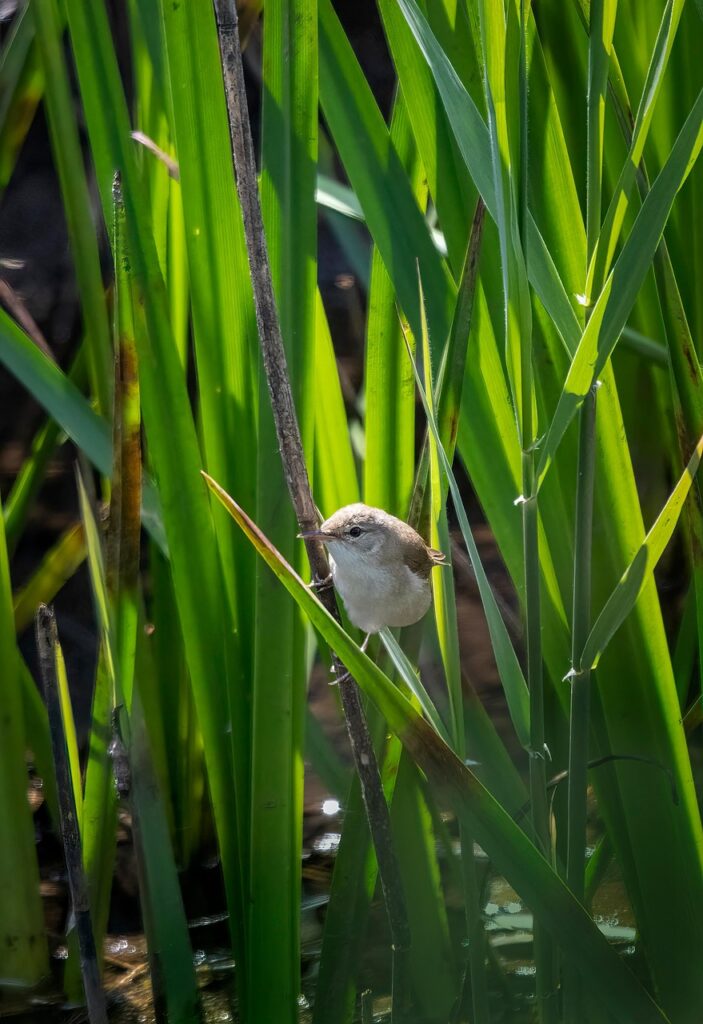
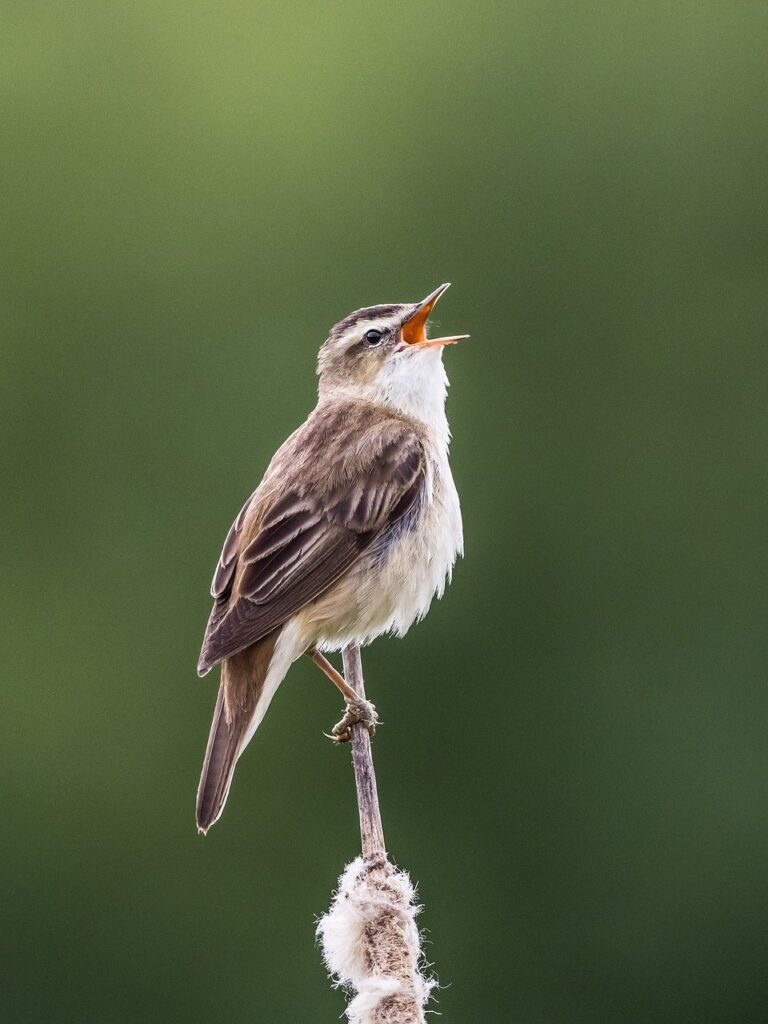
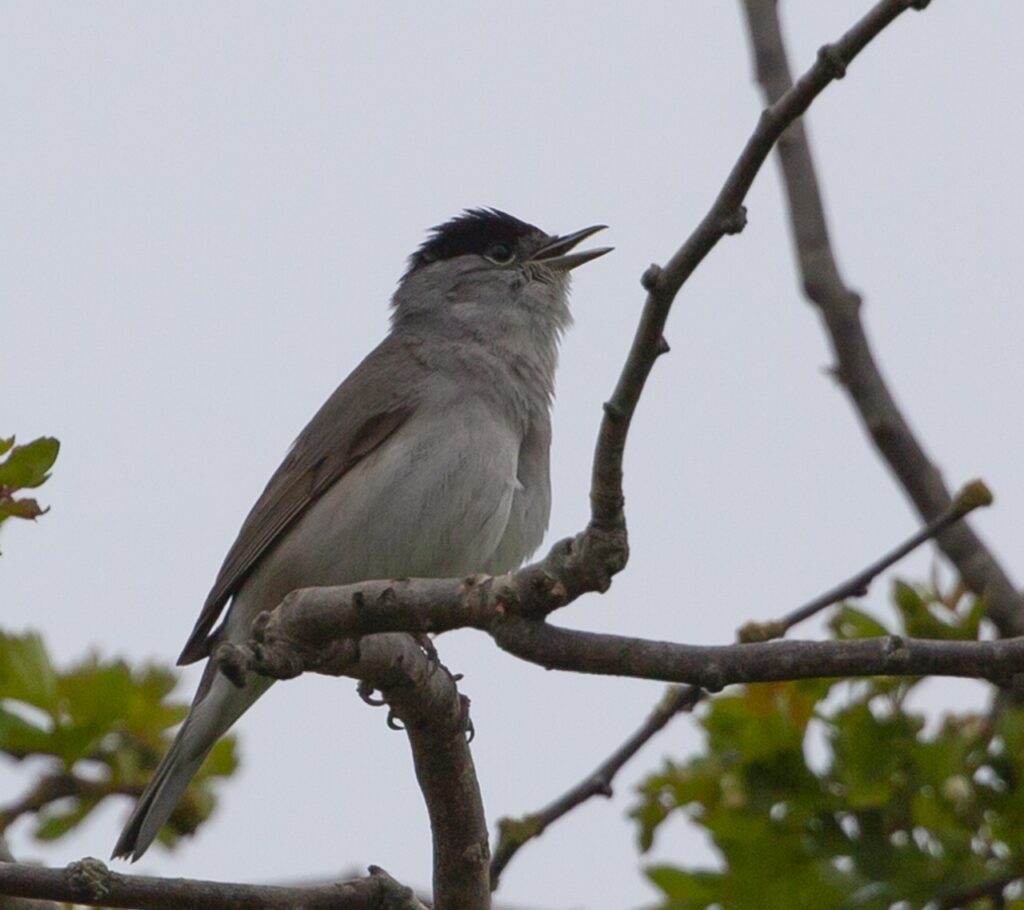
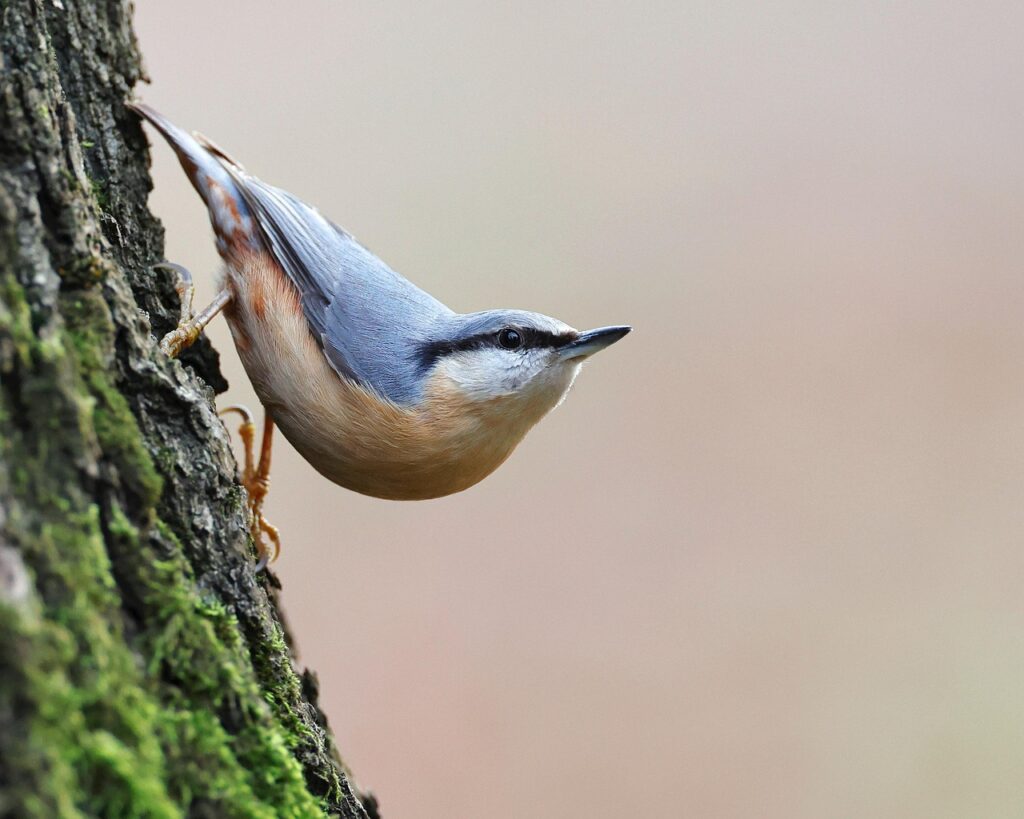
Other birds that you may hear singing at Cwm Connell are; buzzard, red kite, blackcap, redstart, nuthatch, blackbird, dunnock, whitethroat, garden warbler, grasshopper warbler, meadow pipit, wren, skylark and chaffinch – but we’ll leave those for another day!
Best of all, come for a walk while staying at Cwm Connell with someone who knows – it is so good for both the mind and the body!
Steve Halton – Ecologist